
On 10 November 2026, the Interreg South Baltic Programme hosted the webinar “Exploring Interreg South Baltic Projects’ Contribution to the EUSBSR”, bringing together project beneficiaries, representatives of the EU Strategy for the Baltic Sea Region – EUSBSR Policy Areas and macro-regional cooperation stakeholders.
The initiative stemmed from a recognition that opportunities for macro-regional cooperation remain underexplored among the Interreg South Baltic Programme projects. Given the geographical scope of the Programme and the transnational nature of many challenges addressed by its projects, solutions developed through cross-border cooperation can often be relevant and applicable across the wider Baltic Sea region.
With this in mind, the webinar aimed to strengthen the links between South Baltic projects and the EUSBSR Policy Areas, introducing beneficiaries to the Strategy and exploring how projects can engage with it, extending their outreach and benefit from macro-regional cooperation.
From cross-border to macro-regional cooperation
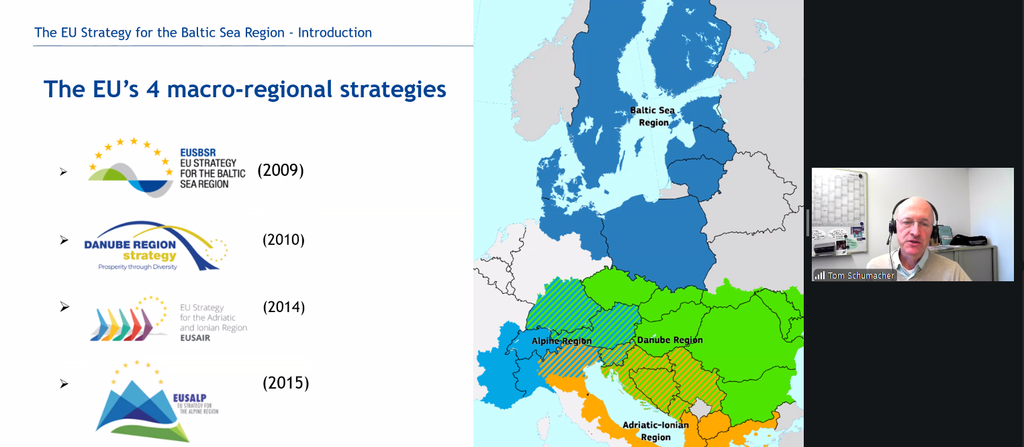
The webinar opened with an introduction to the EUSBSR by Tom Schumacher, Development Officer at the Baltic Sea Strategy Point (BSP), who presented the Strategy, its objectives and opportunities for cooperation between projects and its Policy Areas.
Building on this introduction, the Interreg South Baltic Programme presented its requirements and expectations regarding project contributions to the EUSBSR, highlighting how beneficiaries can align their activities and results with the Strategy and engage with its relevant stakeholders.
The agenda also featured several South Baltic projects that shared their experiences and practical examples of engagement with the EUSBSR Policy Areas. The participating projects included INCONE60, BALTWRECK, PrepAlliance and AMBeR.
Connecting projects with the EUSBSR Policy Areas
A central part of the webinar was dedicated to interactive discussions in four breakout rooms. Each room focused on specific Interreg South Baltic Programme measures and their corresponding EUSBSR Policy Areas, giving beneficiaries the opportunity to exchange directly with Policy Area Coordinators (PACs), explore potential synergies and identify opportunities for future cooperation.
The interactive part of the webinar featured four breakout rooms, connecting South Baltic projects with relevant EUSBSR Policy Areas. Discussions covered smart regions, innovation and healthy communities, with Marcus Wiebke (PA Health) and Aino-Maija Koljonen (PA Innovation), involving projects under Measures 1.1 Digitalising the Region, 1.2 Internationalisation and 4.1 Cooperation; sustainable energy systems and green maritime corridors, with Sami Vesterinen (PA Ship) and Roman Bykov (PA Energy), involving projects under Measure 2.1 Green Energy; sustainable water management, pollution prevention and nutrient circularity, with Elsi Kauppinen (PA Nutri) and Louise Floman (PA Hazards), involving projects under Measures 4.1 Cooperation, 2.3 Circular Economy and 2.2 Water; and sustainable, resilient and innovative tourism, with Magda Leszczyna-Rzucidło (PA Tourism), involving projects under Measure 3.1 Tourism. The exchanges provided beneficiaries with an opportunity to discuss potential synergies, share perspectives and explore ways for cooperation with the respective Policy Areas across the Baltic Sea Region.
Cross-border cooperation programmes can play a role beyond their programme areas
The webinar not only achieved its objective of introducing project beneficiaries to the EUSBSR and exploring the benefits of engaging with the Policy Area Coordinators, but also demonstrated an unprecedented level of interest among beneficiaries. In total, approx. 60 participants joined out of 91 registered, making this one very successful webinar.
This level of interest reflects the important macro-regional role that cross-border cooperation programmes can play beyond their programme areas.
Connecting South Baltic Projects with the EUSBSR: Exploring Opportunities for Macro-regional Cooperation
On 10 November 2026, the Interreg South Baltic Programme hosted the webinar “Exploring Interreg South Baltic Projects’ Contribution to the EUSBSR”, bringing together project beneficiaries, representatives of the EU Strategy for the Baltic Sea Region – EUSBSR Policy Areas and macro-regional cooperation stakeholders.
The initiative stemmed from a recognition that opportunities for macro-regional cooperation remain underexplored among the Interreg South Baltic Programme projects. Given the geographical scope of the Programme and the transnational nature of many challenges addressed by its projects, solutions developed through cross-border cooperation can often be relevant and applicable across the wider Baltic Sea region.
With this in mind, the webinar aimed to strengthen the links between South Baltic projects and the EUSBSR Policy Areas, introducing beneficiaries to the Strategy and exploring how projects can engage with it, extending their outreach and benefit from macro-regional cooperation.
From cross-border to macro-regional cooperation
The webinar opened with an introduction to the EUSBSR by Tom Schumacher, Development Officer at the Baltic Sea Strategy Point (BSP), who presented the Strategy, its objectives and opportunities for cooperation between projects and its Policy Areas.
Building on this introduction, the Interreg South Baltic Programme presented its requirements and expectations regarding project contributions to the EUSBSR, highlighting how beneficiaries can align their activities and results with the Strategy and engage with its relevant stakeholders.
The agenda also featured several South Baltic projects that shared their experiences and practical examples of engagement with the EUSBSR Policy Areas. The participating projects included INCONE60Green, BALTWRECK, PrepAlliance and AMBeR.
Connecting projects with the EUSBSR Policy Areas
A central part of the webinar was dedicated to interactive discussions in four breakout rooms. Each room focused on specific Interreg South Baltic Programme measures and their corresponding EUSBSR Policy Areas, giving beneficiaries the opportunity to exchange directly with Policy Area Coordinators (PACs), explore potential synergies and identify opportunities for future cooperation.
The interactive part of the webinar featured four breakout rooms, connecting South Baltic projects with relevant EUSBSR Policy Areas. Discussions covered smart regions, innovation and healthy communities, with Marcus Wiebke (PA Health) and Aino-Maija Koljonen (PA Innovation), involving projects under Measures 1.1 Digitalising the Region, 1.2 Internationalisation and 4.1 Cooperation; sustainable energy systems and green maritime corridors, with Sami Vesterinen (PA Ship) and Roman Bykov (PA Energy), involving projects under Measure 2.1 Green Energy; sustainable water management, pollution prevention and nutrient circularity, with Elsi Kauppinen (PA Nutri) and Louise Floman (PA Hazards), involving projects under Measures 4.1 Cooperation, 2.3 Circular Economy and 2.2 Water; and sustainable, resilient and innovative tourism, with Magda Leszczyna-Rzucidło (PA Tourism), involving projects under Measure 3.1 Tourism. The exchanges provided beneficiaries with an opportunity to discuss potential synergies, share perspectives and explore ways for cooperation with the respective Policy Areas across the Baltic Sea Region.
Cross-border cooperation programmes can play a role beyond their programme areas
The webinar not only achieved its objective of introducing project beneficiaries to the EUSBSR and exploring the benefits of engaging with the Policy Area Coordinators, but also demonstrated an unprecedented level of interest among beneficiaries. In total, approx. 60 participants joined out of 91 registered, making this one a very successful webinar.
This level of interest reflects the important macro-regional role that cross-border cooperation programmes can play beyond their programme areas.